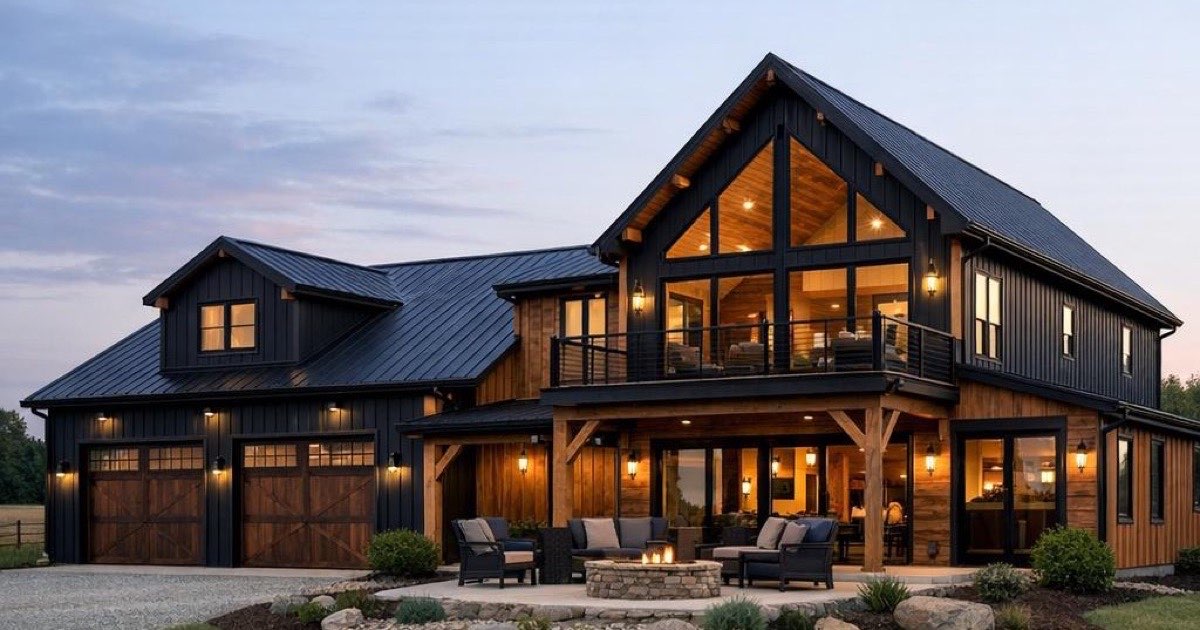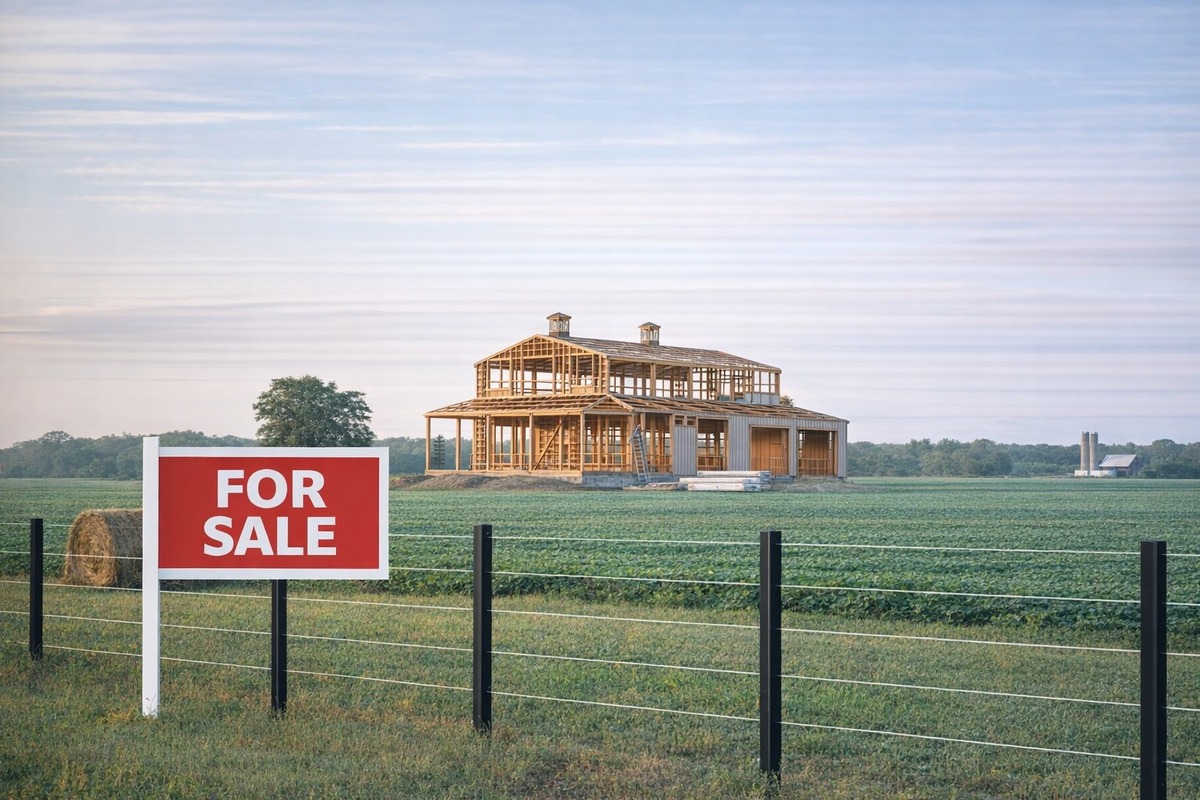

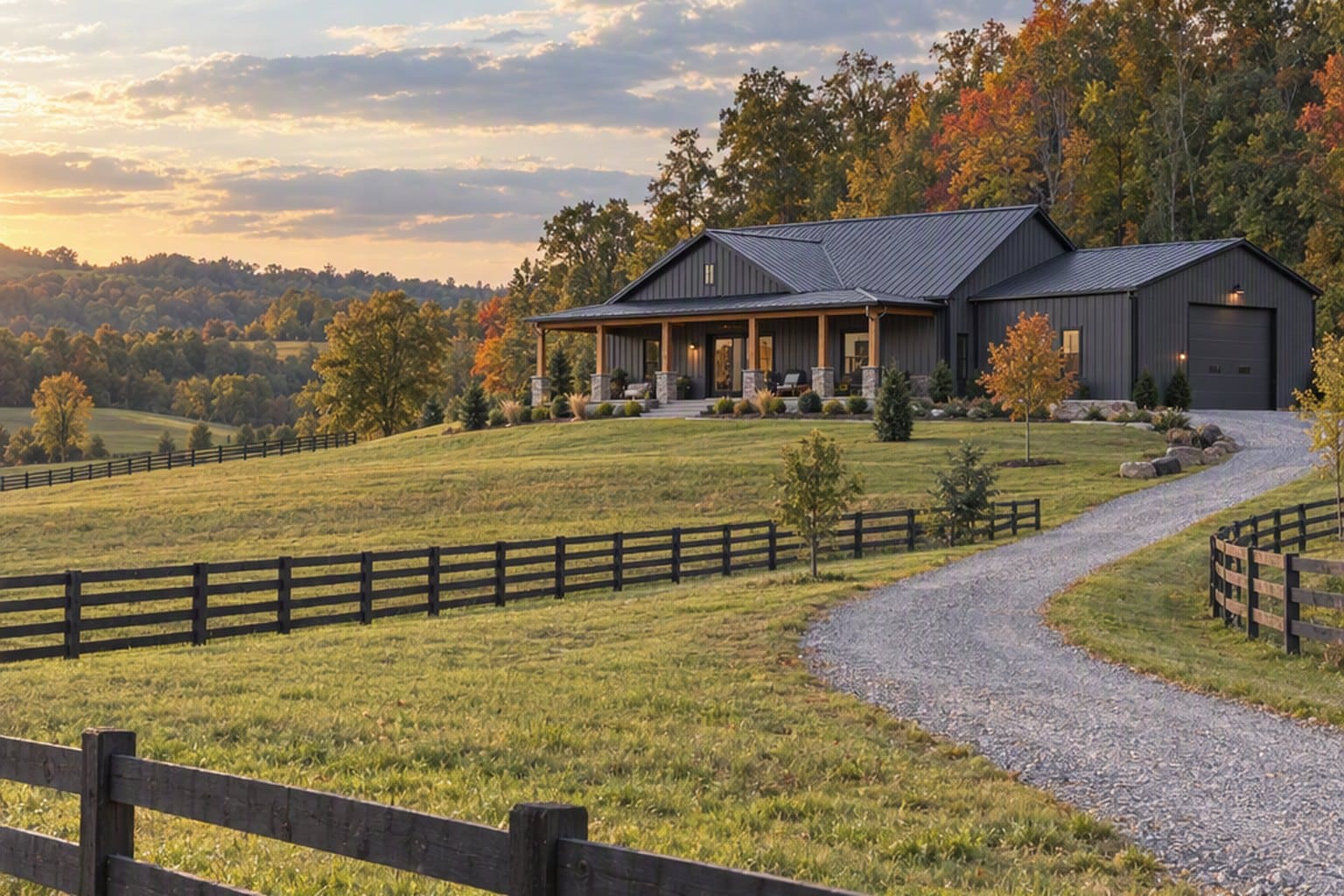
Barndominium cost per square foot in Tennessee can be checked against real published numbers: at least one Tennessee builder lists package prices, and several local charges are fixed fees you can look up before you buy land. This guide uses Wilson County, east of Nashville, as the worked example. The builder and kit prices below are as listed by the sellers on October 21, 2026; the rules and fees are linked to their official sources.
Quick Answer: Published Tennessee Package Prices
Summertown Metals, based in Summertown, Tennessee, lists price levels for each of its barndominium models. It says its shell packages are available throughout Tennessee, while turnkey service depends on distance from its branches in Summertown, Hopkinsville (Kentucky) and Hayden (Alabama). Its prices are marked “+ tax & shipping.” The per-square-foot figures in the last column are our arithmetic using the square footage the company lists for each model.
| Summertown Metals model (as listed Oct 21, 2026) | Package | Listed price | Works out to |
|---|---|---|---|
| Bluewater, 44×28, 1,232 sq ft | Exterior Shell (materials, shell construction and interior wall framing) | $73,903 | about $60/sq ft |
| Shell+ (adds electrical, plumbing and HVAC rough-ins, insulation and drywall) | $135,503 | about $110/sq ft | |
| Turnkey | $187,093 | about $152/sq ft | |
| Southern Monitor, 52×50, 2,230 sq ft listed | Exterior Shell | $164,350 | about $74/sq ft |
| Shell+ | $275,850 | about $124/sq ft | |
| Turnkey | $386,792 | about $173/sq ft |
For a materials-only comparison, Hansen Pole Buildings lists a 40×60×12 barndominium kit at $64,708.25 with engineering and delivery included, about $27 per square foot of footprint. That is a post-frame kit, not a steel frame, and it does not include the foundation or construction labor.
These are two companies’ listed prices, not a Tennessee average. They show the gap between levels: in Summertown’s list, the turnkey price is roughly two and a half times the shell price. None of them include land, site work, a septic system, a well or the county fees below. Listing a company here is not an endorsement.
What a 2,000-Square-Foot Tennessee Barndominium Might Cost
Applying Summertown’s listed rates to 2,000 square feet gives a rough range. This is multiplication, not a quote; a builder’s price for a different plan or size can differ.
| Level | Rate used | 2,000 sq ft |
|---|---|---|
| Exterior shell | $60–$74/sq ft | $120,000–$148,000 |
| Shell with rough-ins and drywall | $110–$124/sq ft | $220,000–$248,000 |
| Turnkey | $152–$173/sq ft | $304,000–$346,000 |
Add sales tax and shipping, land, site work, utilities and the local fees below. Use the national cost guide’s scope method to compare quotes line by line.
Wilson County: Fees You Can Price Before You Build
Wilson County issues residential building permits and publishes its fees. For a new home there:
- Building permit: $0.70 per square foot for single-family homes, so about $1,400 for 2,000 square feet. Fees are paid in full when you apply, and the county’s FAQ says the same rate covers attached garages. Detached barns, shops and garages are charged as accessory structures ($100 up to 1,000 square feet, then $0.10 per square foot); confirm how your plan’s shop area will be counted.
- Adequate Facilities Tax: a flat $5,000 for every new dwelling, paid by a separate check from the permit fee. The fee schedule lists this amount as of 2019, so confirm it with the office.
- Stormwater permit: the county’s 2026 checklist lists a $350 fee for new homes.
- Zoning compliance certificate: required, with a plot plan and a notarized owner affidavit.
- Code edition: the county enforces the 2021 International Residential Code with the 2018 energy code. An active residential permit cannot run longer than 24 months without a certificate of occupancy, so plan your schedule around it.
- Septic with the application: the county checklist lists a septic permit (or sewer approval) as a required item for every new home with a septic system.
| Published day-one charges, 2,000 sq ft home | Amount |
|---|---|
| Building permit ($0.70 × 2,000) | $1,400 |
| Adequate Facilities Tax | $5,000 |
| Conventional septic permit and construction inspection (state) | $500 |
| Stormwater permit | $350 |
| Total | $7,250 |
Other Middle Tennessee counties charge differently. Neighboring Rutherford County, for example, collects a School Facilities Tax of $1.50 per square foot of floor area, which would be $3,000 on 2,000 square feet; ask the county how it measures the area. Check the county where your parcel sits.
Codes: State Rules and County Opt-Outs
Tennessee’s statewide residential code is the 2018 International Residential Code. Local editions can differ: Wilson County enforces the 2021 edition. A county can also opt out of residential building codes for its unincorporated areas by a two-thirds vote of its commission, and the opt-out has to be renewed after each county election. In an opt-out area, an owner can still request a state inspection and, if the home passes, a certificate of occupancy, which some lenders require. The State Fire Marshal’s office requires an electrical permit before any wiring is installed, except where a local government is authorized to run its own electrical inspections.
We did not find a state-published frost-depth or design-load table, so get the values from your county building office or the State Fire Marshal’s residential office before the foundation and the building are engineered.
Septic: TDEC Permit, Soils and Fees
- Septic permits come from the Tennessee Department of Environment and Conservation (TDEC), not the county, except in nine counties with local programs (Blount, Davidson, Hamilton, Jefferson, Knox, Madison, Sevier, Shelby and Williamson), where installers may need an additional local permit.
- TDEC’s fees: $400 for a new conventional system permit (up to 1,000 gallons per day) plus a $100 construction inspection; $500 for an alternative system permit plus a $200 inspection.
- TDEC may require a soils map from a private licensed soil consultant before it decides what system the lot can support. The state rule calls for a high-intensity soil evaluation by an approved soil consultant when lots in a proposed subdivision are evaluated, and the state evaluation fee is $150 per lot for two lots or fewer.
- TDEC does not publish installation prices. Get written quotes for both a conventional and an alternative system until the soil work tells you which one is allowed.
Private Wells
Well drillers and pump installers must be licensed by the state. Before drilling, the homeowner or driller files a Notice of Intent (form CN-1240) with TDEC at least one hour ahead; the rule sets a $75 fee per property, and the notice expires after 180 days. The well must be at least 50 feet from a septic tank or drain field. The state does not regulate private-well water quality, but TDEC strongly recommends testing for bacteria every year. If the parcel can connect to a public water line, compare that connection cost with a well quote.
Building It Yourself in Tennessee
- General work: you may build your own home without a contractor’s license if you will live in it and it is not for sale, lease or rent. The homeowner permit can be used once every two years.
- Hired help: anyone you hire must be licensed if their part of the work is $25,000 or more. Below that, state-inspected electrical and HVAC work needs a Limited Licensed Electrician, and some counties require a Limited Licensed Plumber.
- Electrical: you may wire your own residence under a property owner’s permit, limited to you and your immediate family and to one permit in 12 months. The state rule caps the permit-issuing fee at $5 and the inspection fees at $35 for a rough-in and $35 for the final on a service up to 200 amps.
Bringing Power to a Wilson County Parcel
Middle Tennessee Electric serves Cannon, Rutherford, Williamson and Wilson counties. New members pay a $5 membership fee and a $40 connection fee on the first bill, plus a $300 deposit ($150 for a moderate credit risk, none for a low one). Homes under construction start with a call to 877-777-9020. A temporary service pole must be within 125 feet of an MTE pole. The co-op’s rules say members may need to make a contribution in aid of construction for line extensions, but it does not publish how that is calculated. Get the extension estimate in writing before you close on land far from existing lines.
Land and Greenbelt Taxes
USDA reports Tennessee farm real estate averaged $6,500 per acre in 2026, up 5.7% from 2025; pasture averaged $5,910 per acre. These are statewide averages, not a parcel price; compare recent sales in the county you are considering.
If the land is in Tennessee’s Greenbelt program, agricultural classification requires at least 15 acres. The assessor values the homesite, generally up to one acre, at market value, and land that no longer qualifies is disqualified with rollback taxes based on the taxes saved in the last three years. Ask the county assessor how your plans affect the parcel before you buy.
Bottom Line for Tennessee Builders
Start by confirming who enforces codes on your parcel and what the county charges. In Wilson County, that is about $7,250 in permit, facilities-tax, stormwater and septic fees on a 2,000-square-foot home. Get the TDEC soil and septic answer before you assume a conventional system, ask your electric co-op for a written line-extension estimate, and price at least three comparable bids at the same package level.
Turn these numbers into your own budget
The $29 Owner-Builder Bundle on Gumroad gives you a budget worksheet to price your own build line by line, a planning checklist, question sheets for hiring subs, and our 88-point electrical, plumbing and HVAC rough-in checklist for steel buildings. Just want the checklist? It starts at $14.
Related Guides on BarndoBible
- How Much Does a Barndominium Cost? (National Guide)
- Barndominium Cost per Square Foot in North Carolina
- Buying Land for a Barndominium
- Barndominium Cost Calculator
Sources and Review Scope
- Summertown Metals: Bluewater, Southern Monitor and service area
- Hansen Pole Buildings 40×60×12 barndominium kit
- Wilson County residential fee schedule, 2026 permit checklist, Get a Permit and building FAQ
- Rutherford County School Facilities Tax
- State Fire Marshal: residential permits, adopted codes, opt-out jurisdictions and electrical FAQ; UT CTAS on county opt-outs and CTAS building codes summary (opt-out expiration)
- Board for Licensing Contractors: exemptions and limited licenses; electrical rules 0780-02-01-.05 and .21
- TDEC: septic construction permit and fees, septic FAQ, rule 0400-48-01-.21, rule 0400-48-01-.03 (soil evaluation), well water, CN-1240 notice instructions and well notice rule 0400-45-09-.10
- Middle Tennessee Electric: service area, start service, rules and regulations and service guidelines
- USDA NASS Land Values 2026 Summary and the Tennessee Greenbelt handbook
Images on this page are illustrative and do not show a specific local project.
Last reviewed: October 21, 2026. Rules, fees and listed prices were checked against the sources above on that date. Builder prices are the sellers’ published list prices, not independently verified contracts. Confirm current fees with Wilson County and TDEC before relying on them.