
Rural barndominium fencing often needs more than one kind of fence. The roadside entrance, house yard, garden, shop apron, pond and wooded boundary do different jobs. Trying to solve all of them with one material can raise the cost while producing a layout that is difficult to use.
This guide explains how to plan a closer homesite perimeter when neighboring cattle, deer, pets and equipment access all matter. It also compares common fence systems without treating a conceptual layout as a surveyed plan or construction specification.
Rural Barndominium Fencing: Protect the Homesite First
When the outer boundary fence is old or too expensive to replace at once, a strong interior perimeter around the home can provide a practical first phase. Enclose the house, pet yard and garden while keeping the pond, drainage areas and major equipment routes accessible.
| Zone | Primary purpose | Useful starting point |
|---|---|---|
| Homesite perimeter | Keep neighboring livestock out and define the developed area. | Permanent woven or fixed-knot wire with substantial corners, gates and posts; consider a professionally designed electric offset where appropriate. |
| Pet yard | Provide secure daily access directly from the residence. | Smaller mesh openings, protected bottom edge and self-closing pedestrian gates selected for the actual pet. |
| Garden | Exclude deer and smaller garden pests. | A separate tall enclosure or another deer-specific system rather than assuming a livestock fence will stop deer. |
| Shop and driveway | Preserve trailer, delivery and emergency access. | Wide gates, adequate turning space and an unobstructed apron in front of overhead doors. |
| Pond and drainage | Control access without blocking inspection and maintenance. | Place fences away from dams, spillways, drainage paths and equipment routes unless a site-specific plan calls for another approach. |
1. Start With Uses, Boundaries and Access
Mark the areas that must remain connected before choosing a fence: the public-road entrance, home, shop doors, garden, septic and well service areas, pond access, mowing routes and future construction space. Walk the proposed line with a long trailer or use measured turning templates before fixing gate locations.
Confirm property lines from a current survey before treating any existing fence as the legal boundary. Locate utilities and identify road right-of-way, driveway, drainage and permitting requirements. If a new fence will touch a boundary, discuss the plan with the neighboring landowner and document any agreement about placement, ownership or shared work.
Texas fence responsibilities can depend on local stock laws, the type of roadway and the facts of the incident. Texas A&M AgriLife’s Five Strands fence-law handbook is a useful starting point, but local legal advice may be needed for a dispute or liability question.
Outside Texas, fence and livestock-liability rules come from your own state’s statutes and, in some areas, county or township rules. Your county Extension office or state agriculture department can usually point you to the current fence law that applies to your property.
2. Choose a Physical Barrier for Cattle Pressure
Where cattle already push through an aging fence, give the new homesite perimeter enough physical strength to remain useful even when an energizer is off. Fixed-knot or appropriately specified woven wire can form the barrier, but the finished fence is only as dependable as its end assemblies, corners, posts, fasteners, terrain transitions and gates.
Texas A&M AgriLife identifies woven wire, fixed-knot wire, barbed wire and combinations of those materials among generally accepted livestock-fence materials. Pipe, wood, vinyl and temporary electric systems may also serve particular applications. That list does not select a design for a particular site or animal pressure. Texas generally accepted agricultural practices.
A properly designed electric offset can discourage cattle from leaning on a physical fence. It should supplement the chosen barrier rather than hide weak braces or broken wire. Dry soil, weeds, grounding, lightning protection, energizer capacity and safe gate connections all affect performance. A Texas A&M AgriLife guide to electrified fencing explains the underlying principle: dry or rocky soil may require a ground-return design because the fence depends on a complete electrical path. That guide was written for bear deterrence, and it refers readers to a local Extension agent or livestock specialist for livestock fence designs, so use it for the grounding concept and get cattle-specific design advice locally. Texas A&M electrified-fence guide (bear deterrence).
3. Give Pets a Smaller Daily Enclosure
A pet-safe yard usually works better as a smaller enclosure connected to the residential doors. It can remain secure when a driveway or equipment gate is open and costs less to build to a higher standard than the entire acreage.
- Select mesh opening, height and bottom treatment for the pet’s size, climbing ability and digging behavior.
- Separate the enclosure from vehicle traffic, shop operations, stored materials and unsupervised pond access.
- Use self-closing, latching walk gates where people frequently pass.
- Check for gaps at grade changes, drainage swales and gate bottoms.
- Provide shade and preserve a clear route from the house.
A pet fence should not rely on a generic label such as “dog proof.” Review the complete layout against the actual animal and how every gate will be used.
4. Treat the Garden as a Separate Deer Problem
A fence that stops cattle may still allow deer to jump into a garden. University of Minnesota Extension recommends a well-built fence about eight feet high for deer exclusion and notes that motivated deer can clear even higher barriers when they have room for a running start. Extension guidance on deer barriers.
Concentrating the tall fence around the garden is often more practical than building an eight-foot fence around the full homesite. The design should also address rabbits and other smaller animals near the bottom. Keep enough room inside for paths, raised beds, compost, irrigation and maintenance. Confirm that the gate is wide enough for the cart or equipment you expect to use.
5. Protect Shop and Trailer Access
Large overhead doors need more than a clear opening directly in front of them. Preserve room for approach, backing, turning and temporary material storage. A beautiful residential fence can become an expensive obstacle if it narrows the shop apron or forces trailers through a tight angle.
Plan at least one equipment gate around the longest and widest vehicle combination expected on the property. Consider delivery trucks, compact equipment, septic service, emergency vehicles and future construction. Use removable sections only where the hardware and reinstallation process will keep the fence dependable.
6. Set the Driveway Gate Back From the Road
A rural entrance should allow a vehicle and trailer to leave the travel lane before stopping at a closed gate. The correct setback and apron geometry depend on road authority requirements, right-of-way, ditch drainage, sight distance and the design vehicle.
Compare a manual gate with solar or utility-powered automation only after settling the gate location and swing. An automatic system may include the operator, battery, solar panel or electrical feed, controls, safety devices, hinges, stops, locks and communication equipment. Ask how the gate can be opened during a power, battery or cellular failure.
7. Keep Fencing Away From Pond and Drainage Trouble
Do not place a fence across a pond dam, spillway or drainage route merely because it creates the shortest line. Pond embankments and outlets need inspection, mowing and repair access. Wire fencing can also collect debris where water flows.
If livestock exclusion from water is part of the project, develop that portion with local conservation guidance. NRCS publishes a national Fence 382 conservation-practice framework but directs landowners to the local Field Office Technical Guide because state and site criteria may be more restrictive. NRCS Fence 382 overview.
8. Compare Fence Systems by Complete Installed Scope
| System | Potential role | Questions for the quote |
|---|---|---|
| Fixed-knot or woven wire | Physical barrier around the homesite, garden base or pet area when mesh and height suit the use. | Wire specification, post spacing, braces, bottom clearance, terrain changes, gates and repair method. |
| High-tensile electric | Livestock control or an offset protecting another fence when professionally designed and maintained. | Wire layout, energizer, grounding, dry-soil performance, vegetation control, lightning protection and testing. |
| Pipe or ornamental metal | Entrance, high-use gate area or visible residential frontage. | Steel dimensions, coating, welding, corrosion protection, posts, gate hardware and repair finish. |
| Wood rail with wire backing | Residential appearance with a physical mesh barrier. | Wood species and treatment, fasteners, wire position, ground contact, staining and replacement cycle. |
| Vinyl or composite | Selected residential areas where the manufacturer approves the use and exposure. | Wind and impact limits, internal reinforcement, gate structure, warranty and replacement availability. |
Do not compare bids only by price per linear foot. Require the same route, fence height, wire or rail specification, post and brace schedule, number and width of gates, clearing, disposal, rock or difficult-soil allowances, electrical scope and warranty.
9. A Practical Phasing Plan
- Document the site. Confirm the survey, utilities, service routes, drainage and intended gate locations.
- Build the homesite perimeter. Prioritize the sides exposed to neighboring cattle and complete a secure physical barrier.
- Add the pet yard. Connect it to the residence and keep it independent from equipment gates.
- Enclose the garden. Use a deer-specific height and a lower barrier appropriate for smaller pests.
- Upgrade access. Improve the driveway entrance and add automation only after the geometry works.
- Repair distant boundaries. Address the remaining property fencing as budget and land use require.
10. Products That Deserve Separate Comparisons
Several components justify their own buying guides: fixed-knot versus traditional woven wire; wood versus steel posts; manual versus solar gate openers; gate hinges and latches; fence energizers; ground systems; voltage testers; surge and lightning protection; wildlife cameras; driveway alarms; and post-driving or wire-tensioning tools.
For tools used only once, compare rental and contractor pricing before buying. The Barndominium owner-builder tool list explains how to separate repeat-use purchases from specialty equipment and professional work.
Three Useful Products to Compare
Affiliate disclosure: As an Amazon Associate, we earn from qualifying purchases. If you purchase through the Amazon links below, we may earn a commission at no additional cost to you.
These examples address fence maintenance, a pedestrian gate and vehicle arrival alerts. They were selected from manufacturer specifications, not hands-on testing. Confirm the exact model, seller, warranty and compatibility before buying.
Gallagher G50905 Fence Volt/Current Meter and Fault Finder
If your fence includes an electric offset, this tester combines voltage and current readings with fault-finding functions. It can help with routine checks and locating problems. It is intended for electric fencing, not household electrical testing, and does not replace proper grounding, repairs or a sound physical barrier.
View Gallagher G50905 fence tester on Amazon
D&D Technologies LokkLatch REGULAR S3 (LL3AL)
A key-lockable, adjustable latch to compare for a compatible home, garden or pet-yard pedestrian gate. This model suits square gate frames and posts. Out of the box it operates from one side; an optional External Access Kit lets it be opened and locked from both sides. Check the required mounting gap and hardware before ordering. The latch does not close the gate: compatible self-closing hinges are a separate component. It is general-purpose, non-safety hardware, so do not treat it as childproof or pool-safety hardware.
View D&D LokkLatch LL3AL on Amazon
Mighty Mule FM231 Wireless Driveway Alarm
This standalone vehicle-arrival alarm uses an electromagnetic sensor and an indoor chime. Its advertised transmitter-to-receiver range is up to 400 feet; actual performance depends on placement and obstructions. It detects moving metal vehicle mass, not people, deer or pets. Check transmitter batteries, receiver power and the installation instructions before purchase.
View Mighty Mule FM231 driveway alarm on Amazon
Keep automatic gate openers for a separate comparison once gate dimensions, weight, wind exposure, power and required safety devices are settled. Bulk wire, posts and complete animal enclosures also need a site-specific specification.
Plan the Rest of the Homesite
Use the barndominium build roadmap to coordinate fencing with construction access. Include clearing, gates, braces and future repairs in your overall barndominium budget.
Rural Fence Planning Checklist
- Current survey and proposed line marked
- Utility and private-service locations confirmed
- Road authority and driveway requirements checked
- Livestock, deer and pet objectives written separately
- Garden footprint and working paths included
- Shop, trailer, delivery and emergency access tested
- Pond dam, spillway and drainage access preserved
- Gate widths, swing, stops and failure access documented
- Fence, post, brace and fastener specifications written
- Electric-fence design and grounding documented where used
- Vegetation control and inspection responsibilities assigned
- Local fence-law questions reviewed before boundary work
A good rural fence plan responds to the property instead of forcing one product around every feature. Protect the daily living area first, keep machinery and water-management routes open, and make each enclosure strong enough for the animal it is intended to control.
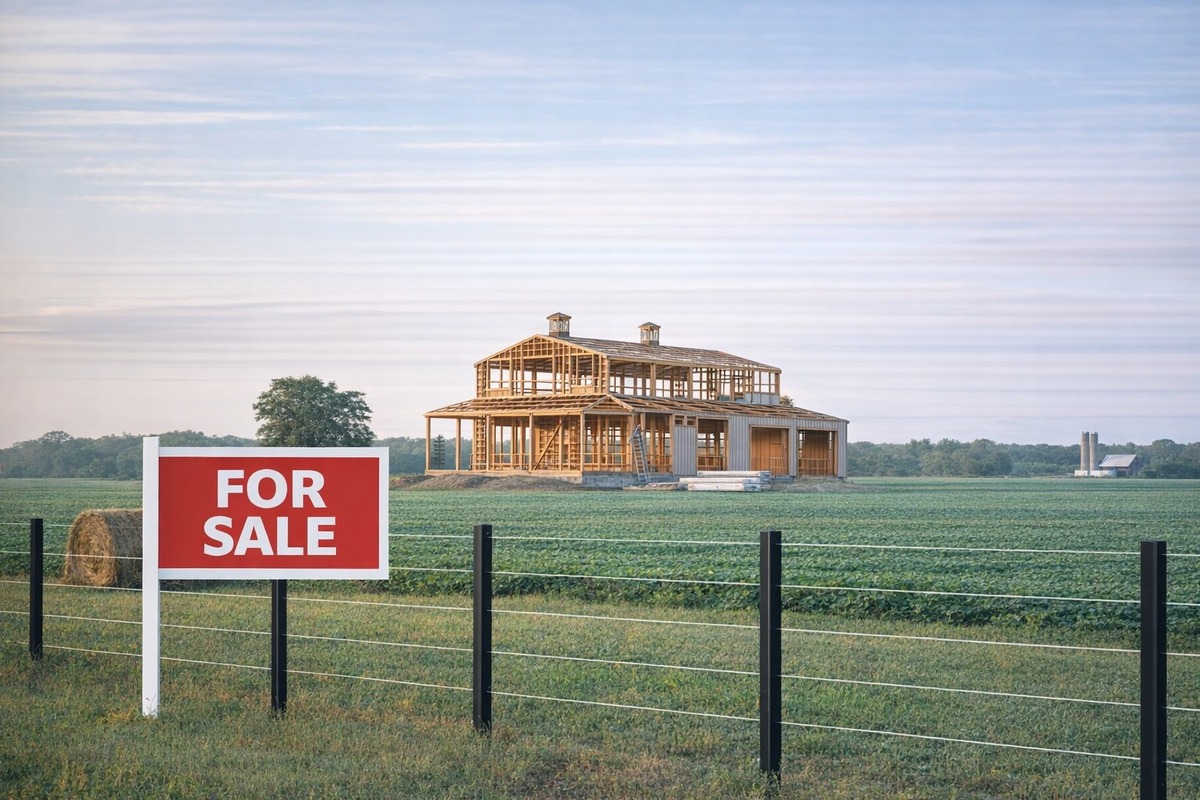
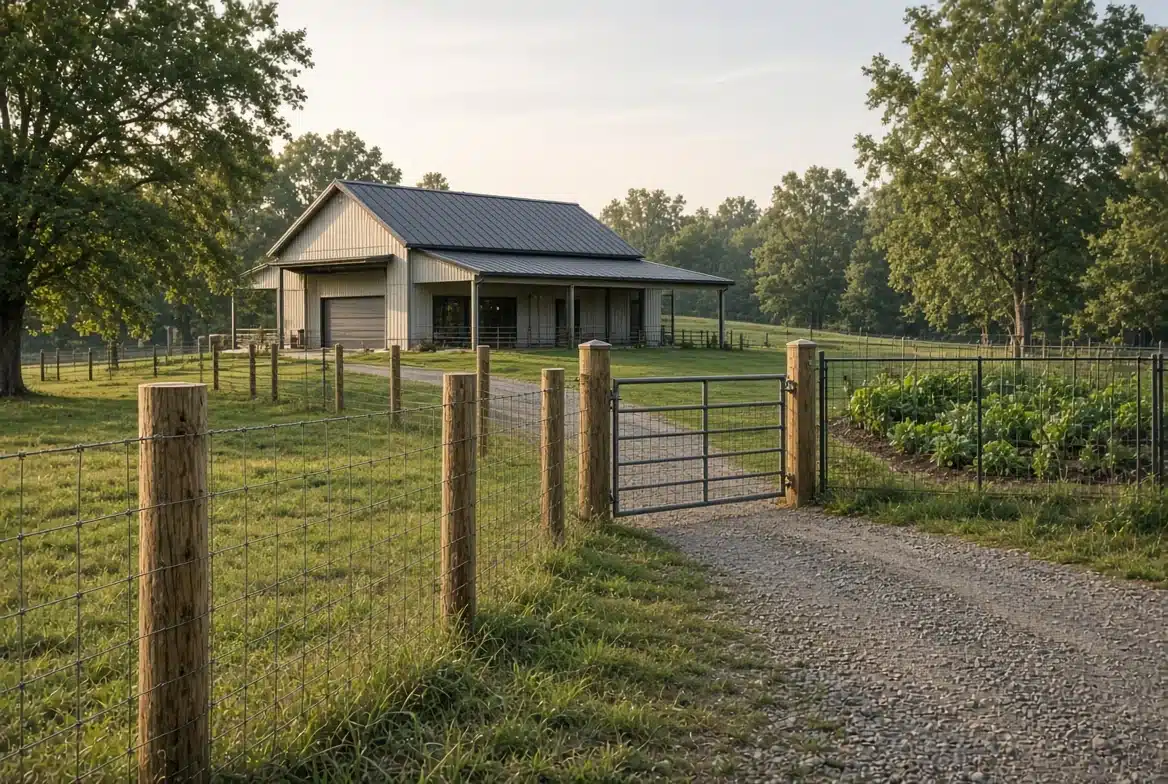
Images on this page are illustrative and do not show a specific project.
Sources reviewed: October 20, 2026. This article provides planning information. It does not establish a property boundary, determine local fence-law responsibility, or specify a livestock, electrical or structural design for an individual site.