
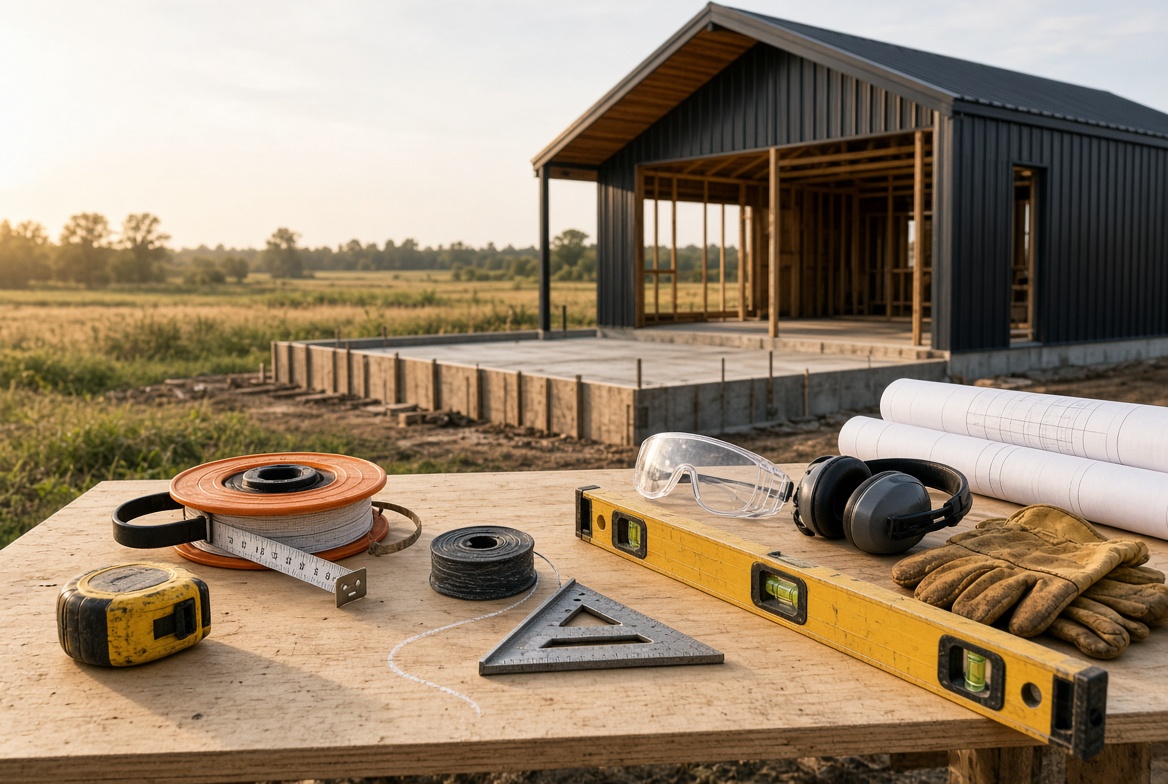
This barndominium owner-builder tool list focuses on the practical items worth owning, renting, or leaving to a qualified professional. Building a barndominium does not require buying every tool a contractor owns. One of the easiest ways to overspend early is buying specialized equipment you may use once.
The smarter approach is to own dependable measuring, marking, and personal-protection tools for the jobs you will handle repeatedly; rent high-dollar equipment when a short-term need arises; and leave property boundaries, engineered foundation layout, structural work, and licensed trade work to qualified professionals.
If you are still mapping the overall budget, start with our complete barndominium cost guide. This tool list helps you plan the smaller owner-builder purchases that can support a well-run project.
Affiliate disclosure: As an Amazon Associate I earn from qualifying purchases. Our recommendations are selected for the job they help solve, not because they are the most expensive option. Product card images are illustrations, not photos of the exact products.
Quick guide: what to buy, borrow or rent
Start with the tools for your next task. Select a tool below to read its uses and limitations.
| Tool | Main job | Buying decision |
|---|---|---|
| 25-ft tape | Openings and material checks | Buy now |
| Speed square | Square marks and quick checks | Buy now |
| Chalk / mason’s line | Straight reference lines | Buy as needed |
| Safety goggles | Task-appropriate eye protection | Have before the task |
| Earmuffs | Task-appropriate hearing protection | Have before the task |
| Open-reel tape | Preliminary long runs | Buy when planning starts |
| 48-in magnetic I-beam level | Doors, trim and individual boards | Buy when needed |
| Measuring wheel | Rough driveway and fence distances | Borrow or rent unless used often |
| Rotary laser | Elevation checks from a benchmark | Rent first |
Selection approach: This list prioritizes repeat-use tools, a clear job for each purchase, and renting equipment used only occasionally. It does not present hands-on product test results. Check the model, specifications, fit and included accessories before buying.
Barndominium owner-builder tool list: start with the essentials
These are the items worth owning before the first major workday. They help with preliminary layout, material checks, form-board checks, shop tasks, and eventual interior work.
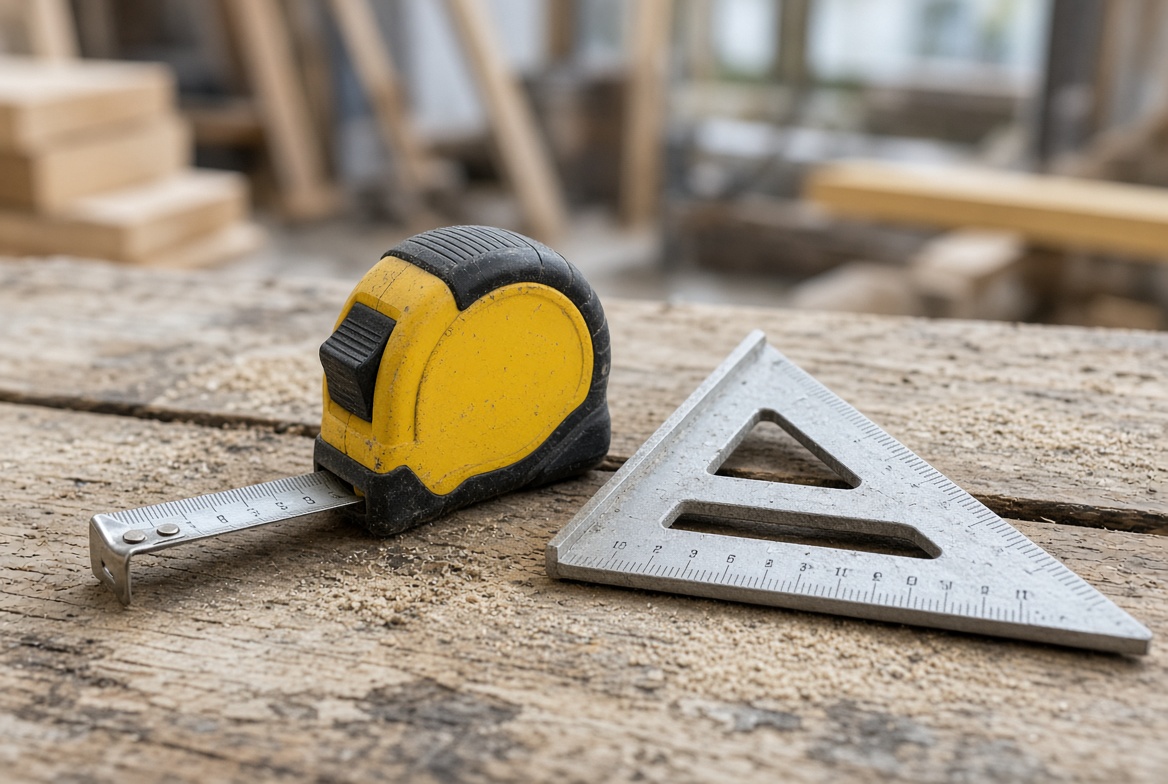
1. A dependable 25-foot tape measure
A good pocket tape measure will be in your hand constantly: checking openings, confirming material lengths, measuring form boards, and working through finish details.
A solid option: STANLEY FATMAX 33-725, 25-foot tape measure
- A wide blade is easier to read and extend when you are working alone.
- Keep one in your vehicle or job box instead of borrowing the crew’s tape.
Deciding whether to add a laser distance measure? Our laser measure vs. tape measure guide explains which tasks suit each tool, including room estimating and outdoor limitations.
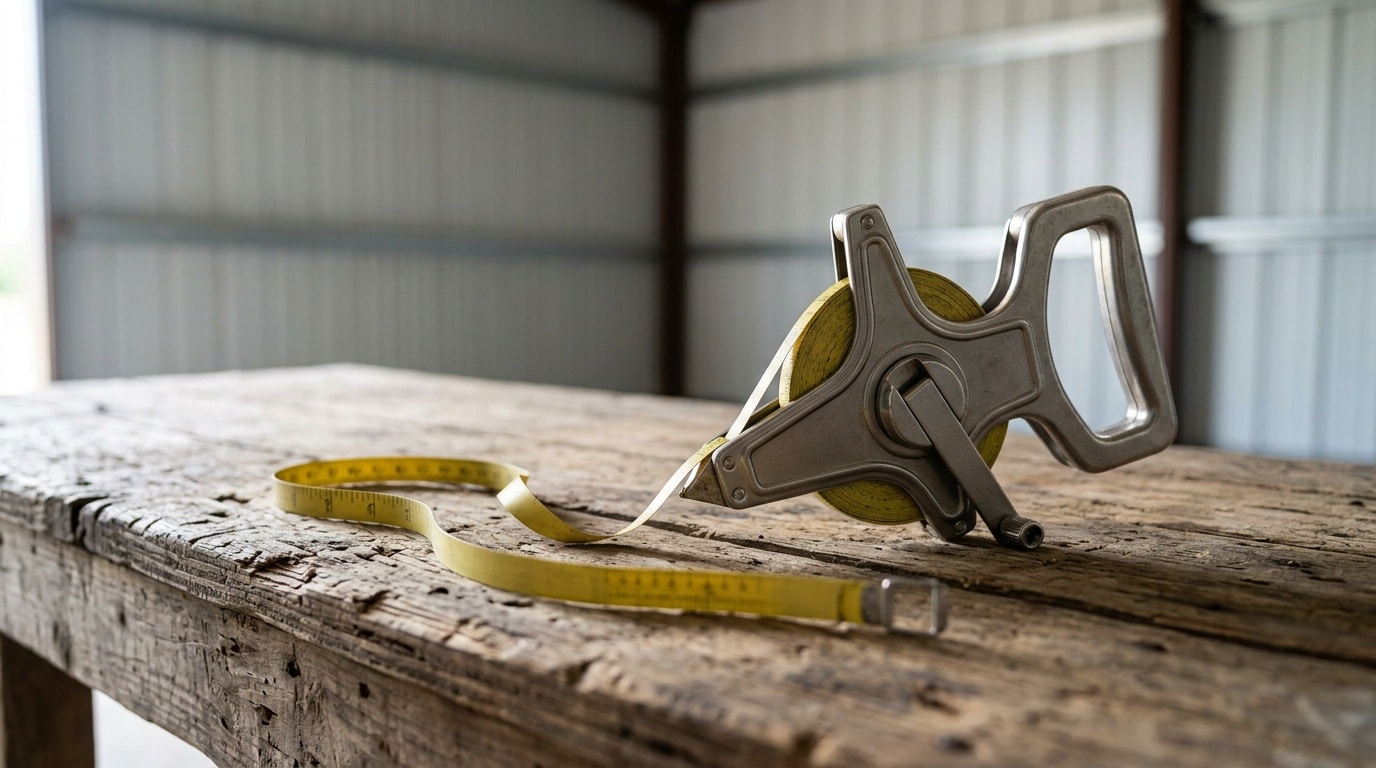
2. A 300-foot open-reel tape for early layout
A pocket tape is not the right tool for measuring a footprint, checking long runs, or comparing diagonals during preliminary planning. A fiberglass open-reel tape is inexpensive, stores easily, and is more useful than a measuring wheel when you need a reasonably repeatable straight-line measurement.
A solid option: Komelon 6633, 300-foot open-reel fiberglass tape
- Useful for early site planning and preliminary building dimensions.
- It is not a substitute for a boundary survey or professional foundation layout.
3. A chalk line and mason’s line
These two inexpensive tools make it easier to establish straight reference lines. A chalk line transfers straight marks to lumber, slabs, and other surfaces. Mason’s line stretches between batter boards to give you a visible reference for a run of forms.
Suggested options:
- TAJIMA Chalk-Rite Jam Free CR301JF, 100-foot chalk line
- MARSHALLTOWN ML340 braided mason’s line, 500-foot spool
Before snapping a line on finished or exposed concrete, test the chalk first. Some colors and formulations can be harder to remove than expected.
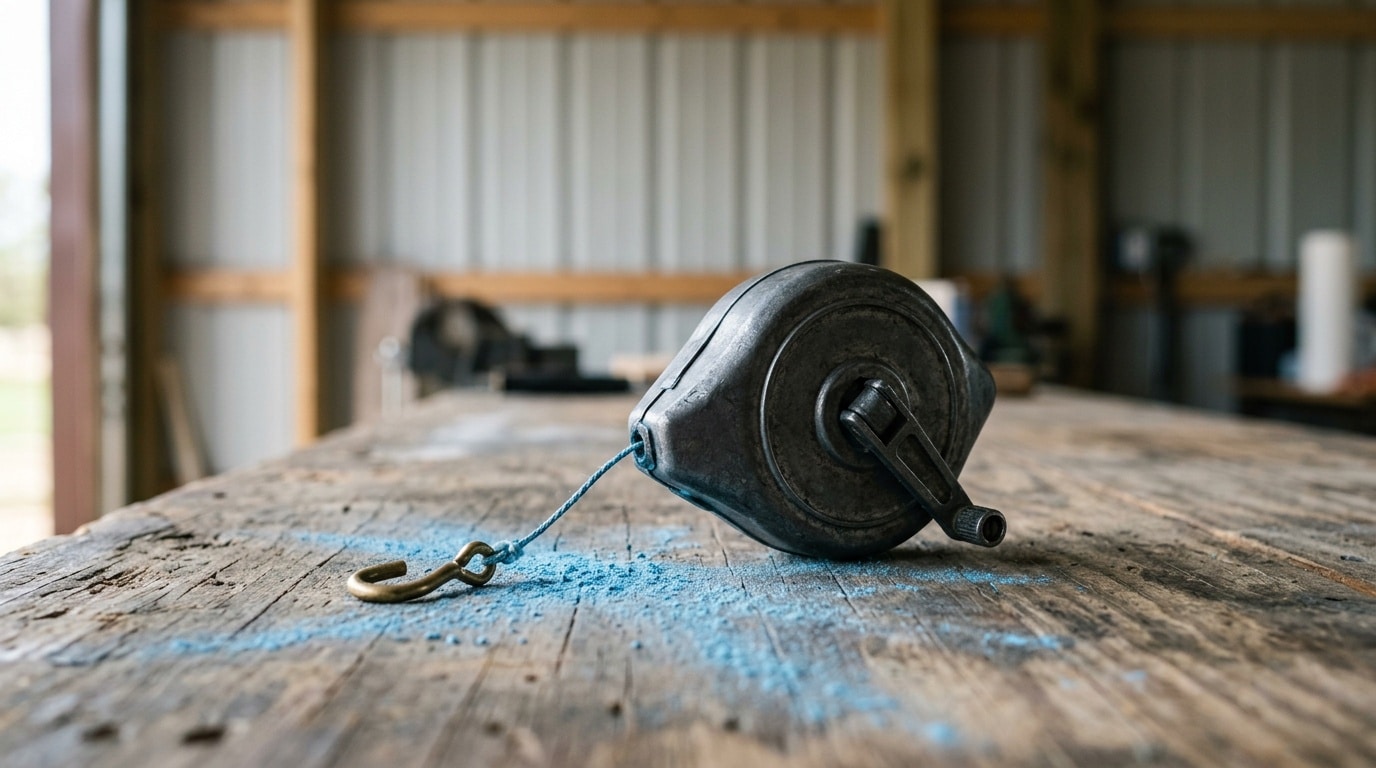
For mason’s line, check the spool length and material before buying. Choose the 500-foot braided nylon version if you want the option described here; similarly named products may use a different size or construction.
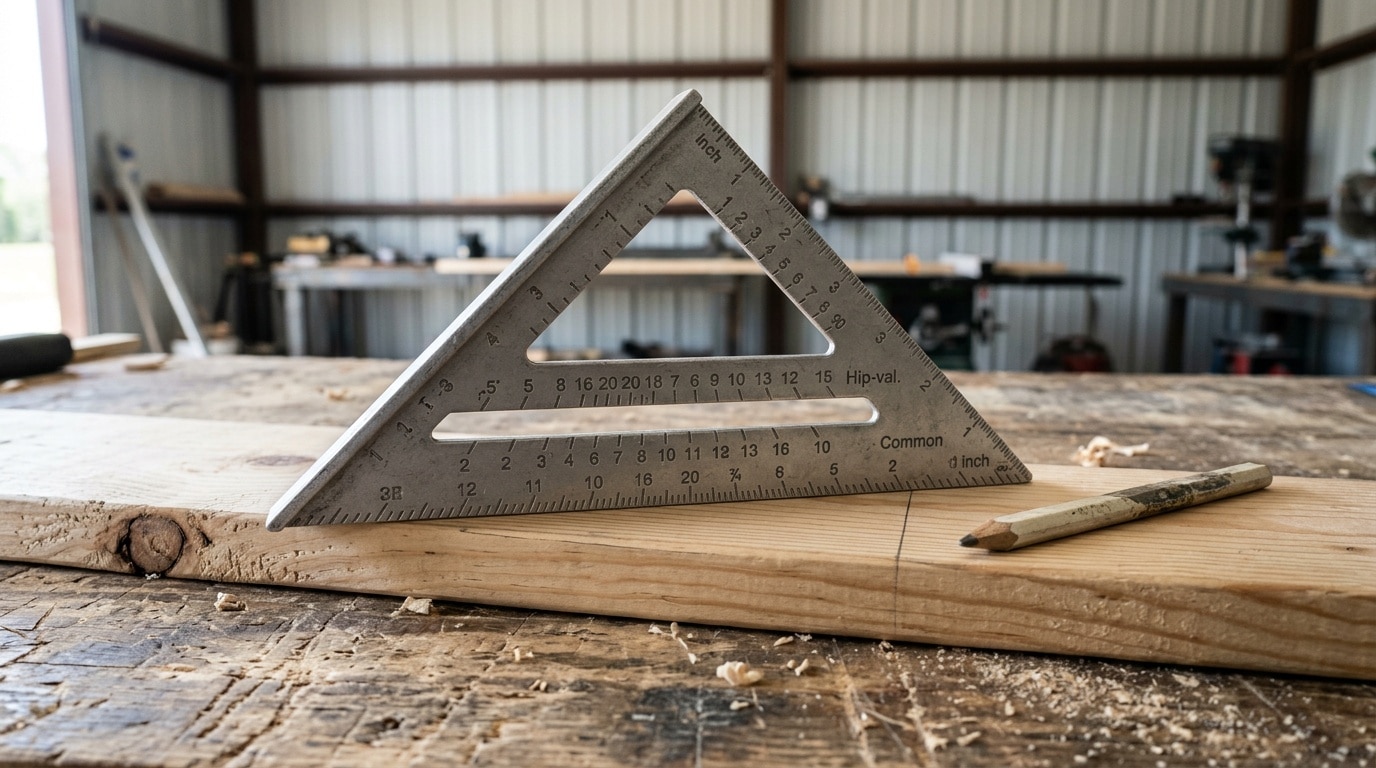
4. A speed square
A 7-inch aluminum speed square is one of those modest tools that earns its place throughout a build. It helps you mark square cuts, check corners, and make quick layout checks on form lumber, blocking, shelves, and small shop projects.
A solid option: SWANSON S0101 Original Speed Square
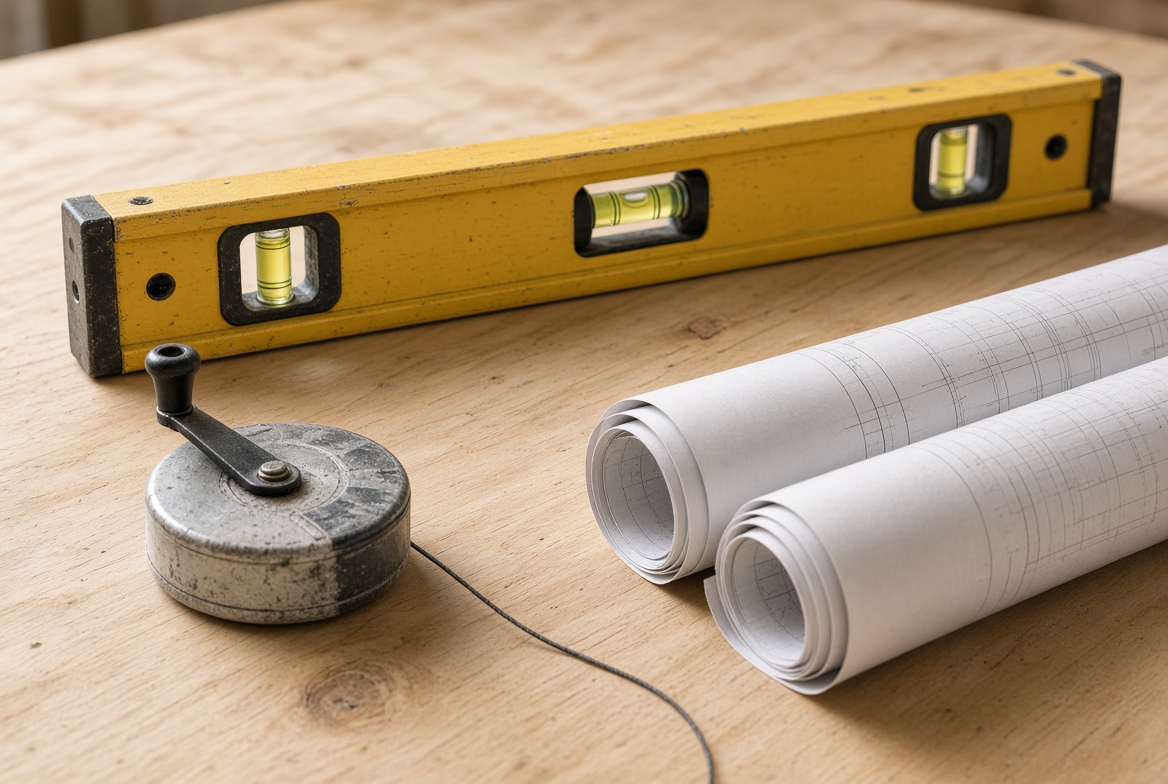
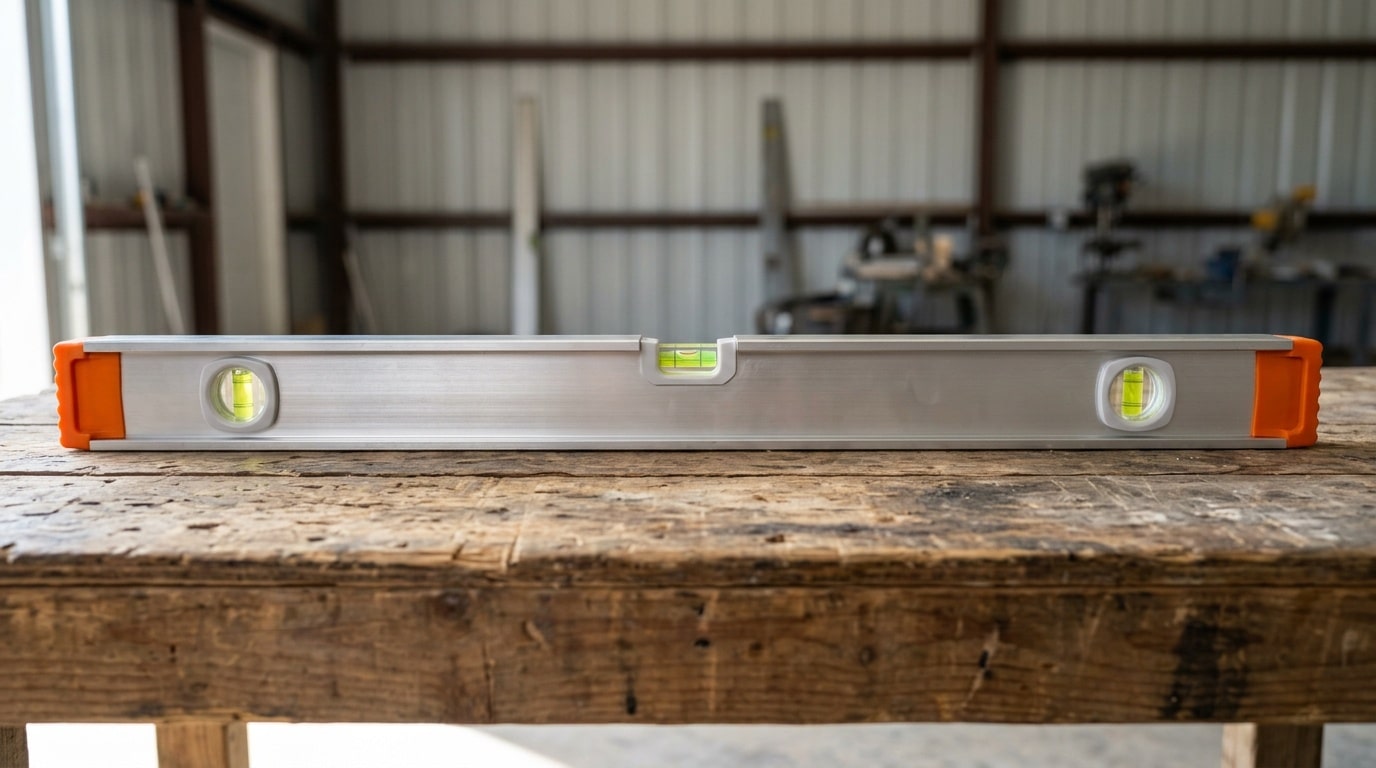
5. A 48-inch magnetic I-beam level
You cannot use a level to replace a site plan or engineer’s requirements, but a quality 48-inch level is useful for checking individual form boards, doors, trim, shelves, and many later interior tasks.
A solid option: DEWALT DWHT42167 48-inch magnetic I-beam level
- The magnetic edge can be handy around suitable steel components.
- Confirm the exact model, length, and warranty on the product page before ordering; product variants can be easy to confuse.
Safety gear is part of the tool list

Protective equipment should not be an afterthought. The items below are general-purpose starting points—not a complete safety plan for every job. Follow the equipment instructions and use task-specific protection for cutting, dust, wet concrete, chemicals, or work at height.
6. Sealed, anti-fog safety goggles
For dusty and debris-producing work, goggles that seal around the eyes usually offer better coverage than basic safety glasses. Fit matters, especially if you wear prescription glasses or need to combine eye protection with a respirator or hearing protection.
A solid option: DEWALT DPG82 Concealer clear-lens goggles
- Confirm the product bears the appropriate ANSI impact marking.
- Do not assume an impact rating means it is suitable for every chemical-splash task.

7. Hearing protection
Hearing damage is cumulative, and many ordinary jobsite tools are loud enough to deserve protection. Earmuffs are simple to keep in a job box and easy to share with a helper when a noisy task comes up.
A solid option: 3M Pro-Grade earmuffs, model 90565-4DC-PS
- Verify the Noise Reduction Rating (NRR), fit, and cushion condition.
- The listed NRR is a laboratory rating; real-world protection depends on proper fit and seal.

Useful, but not essential for every property
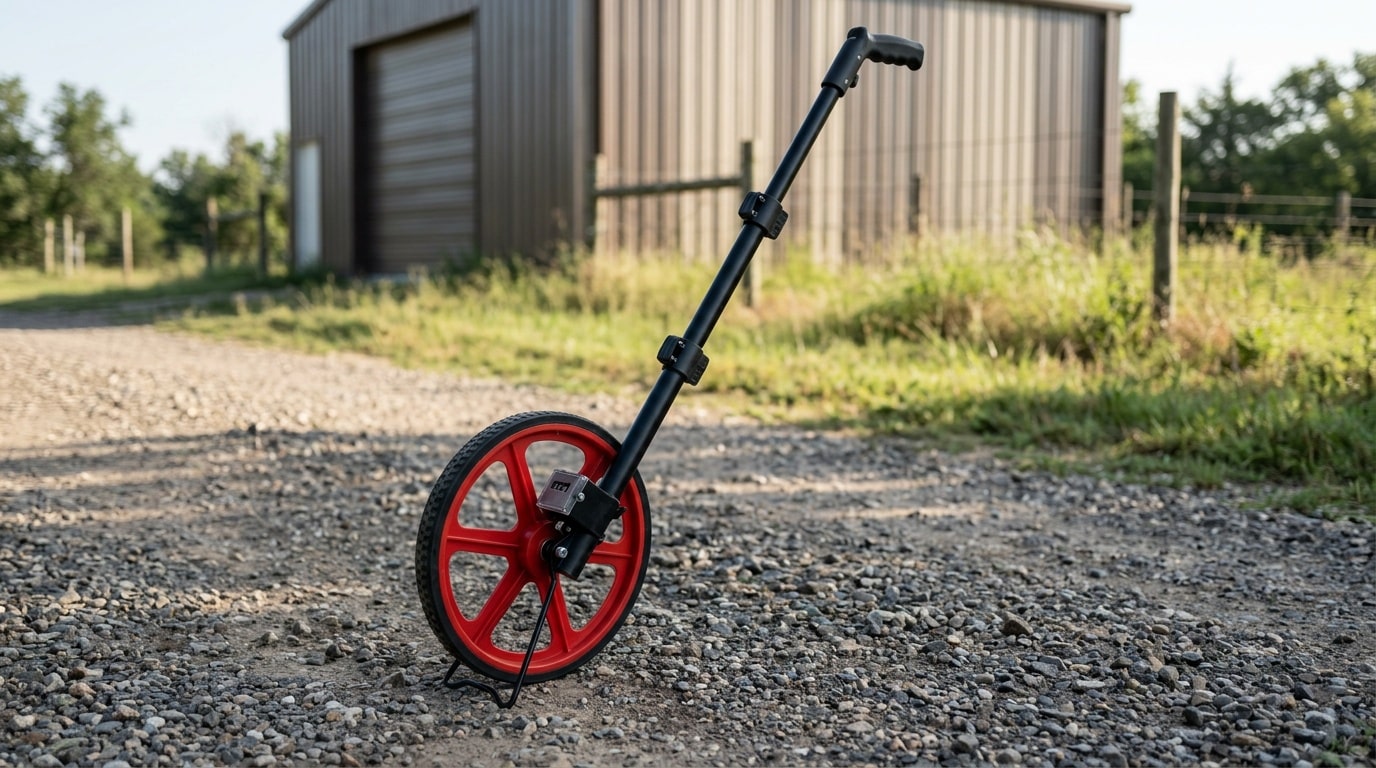
8. A measuring wheel
A measuring wheel makes rough estimating much faster for driveways, fencing runs, access paths, and material-delivery routes. It is a convenience tool, not a precision layout instrument: uneven ground and wheel slip affect the result.
A solid option: Keson RRT12 measuring wheel
Choose the feet-and-inches version if that is how you plan and communicate dimensions. Keson also makes similarly named decimal-foot models, so double-check before ordering.
Buy, borrow, or rent? Buy it if you have acreage or expect to repeat these measurements. Otherwise, borrow or rent one.
Rent this before you buy it
9. A rotary laser level
A rotary laser level can be extremely helpful for comparing elevations and checking form heights from an established benchmark. But it is not a first purchase for most owner-builders. It is specialized, needs careful setup, and the complete kit matters as much as the laser itself.
A rent-first option to research: Bosch REVOLVE900 GRL900-20HVK kit
If you do decide to rent or buy, confirm that the package includes the receiver, tripod, grade rod, batteries, and appropriate accessories. Follow the manufacturer’s laser-safety instructions. For critical foundation layout or elevation work, bring in a qualified professional.
Metal roofing and siding: choose specialty tools around the job
If your planned work includes metal panels or trim, discuss the required cutting, bending and fastening tools with the panel supplier and installer. Check the exact tool’s material capacity and compatibility with the specified system before buying; occasional-use tools may be better rented or left to the trade.
Affiliate disclosure: We may earn a commission if you buy through this Supply Maverick link.
Supply Maverick’s hand-tool collection includes metalworking options such as snips, seamers, folding tools and cleanup equipment. We have researched the catalog, not hands-on tested these products. Explore metal roofing and siding tools at Supply Maverick.

Metal roofing and siding tools
Snips, seamers and folding tools
Researched catalog, not hands-on tested. Check each tool’s capacity against your panel system before buying.
Explore at Supply Maverick →Affiliate link: BarndoBible may earn a commission at no extra cost to you.
What this list does not replace
Even a well-equipped owner-builder should not treat tools as a shortcut around professional responsibilities. Plan for qualified help with:
- Property-boundary surveys and setbacks
- Engineered foundation and structural requirements
- Final building layout where accuracy affects the foundation
- Electrical, plumbing, HVAC, and other licensed work required in your location
- High-risk tasks, including major lifting, roofing, cutting, and concrete work
The best owner-builder toolkit supports better questions, clearer communication, and small repeatable tasks. It does not turn a planning guide into engineering advice.
A simple buying order
- Tape measure, speed square, chalk line, goggles, and earmuffs.
- Open-reel tape and mason’s line when site and footprint planning begins.
- Magnetic I-beam level once you are checking forms, shop work, or interiors.
- Measuring wheel only if your property makes it useful.
- Rent the rotary laser when the job actually calls for it.
That order keeps the first investment modest while giving you tools that will continue to earn their place after the barndominium is complete.
Want the whole rough-in on one checklist?
The Barndominium Rough-In Pack is our paid checklist pack on Gumroad. It puts all 88 electrical, plumbing and HVAC rough-in checks for steel buildings in inspection order, including the well and septic tie-ins. Starts at $14. The $29 Owner-Builder Bundle adds the planning checklist, a budget worksheet and question sheets for hiring subs.
Plan the work before buying more tools
Preparing to document work before walls close? Use our pre-drywall walkthrough guide for a simple kit, a room-by-room photo plan and an action log to review with your trades.
Use our free barndominium rough-in checklist to plan the questions and checks to discuss with your trades before work is covered. Buy or rent the tools for the tasks you will actually handle.