
Last checked: November 6, 2026. Rules and fees change; confirm each item with the office named before you commit money.
If you’re searching “how much does a barndominium cost in South Carolina,” here’s the honest answer up front: we don’t have a dated, apples-to-apples set of South Carolina quotes yet, so we’re not going to give you a statewide price per square foot. A number without a scope behind it is how budgets go wrong.
What we can give you is the part that decides your real number: what a complete budget has to include, and which checks on your specific parcel come first. Get those right and the quotes you collect will actually be comparable.
Define shell, dry-in and completed-home scope
The same building can be priced three very different ways, and quotes often mix them without saying so.
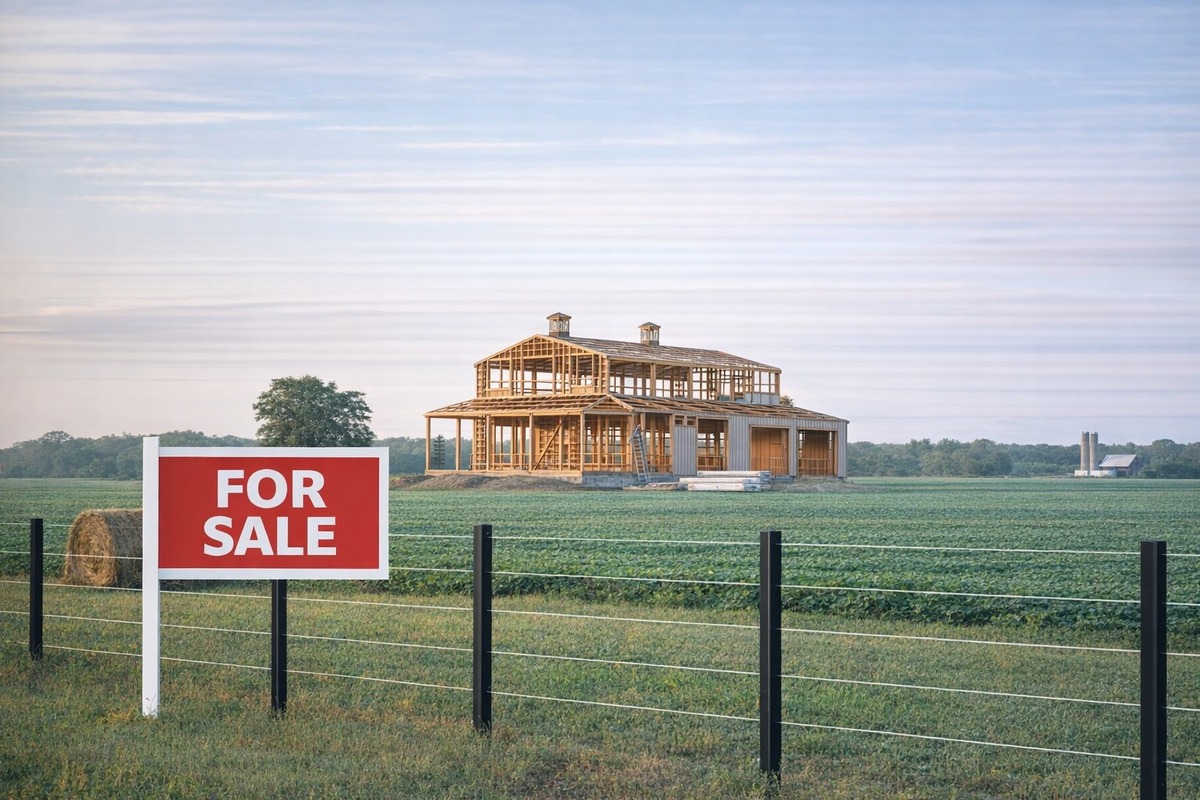
- Shell: the frame, roof and wall panels. It keeps rain off but isn’t a house.
- Dry-in: shell plus doors, windows and whatever makes the building weather-tight. Ask each seller exactly what “dry-in” includes, because the line moves from company to company.
- Completed home: everything you need to live there: insulation, plumbing, electrical, HVAC, drywall, flooring, cabinets, fixtures, and the inspections that go with them.
Lesson: before comparing two numbers, write which of these three each one is. If a quote doesn’t say, ask in writing.
Build a complete budget including land, site and utilities
The building is only one column. For a rural South Carolina parcel, your budget should also have lines for:
- Land and closing costs
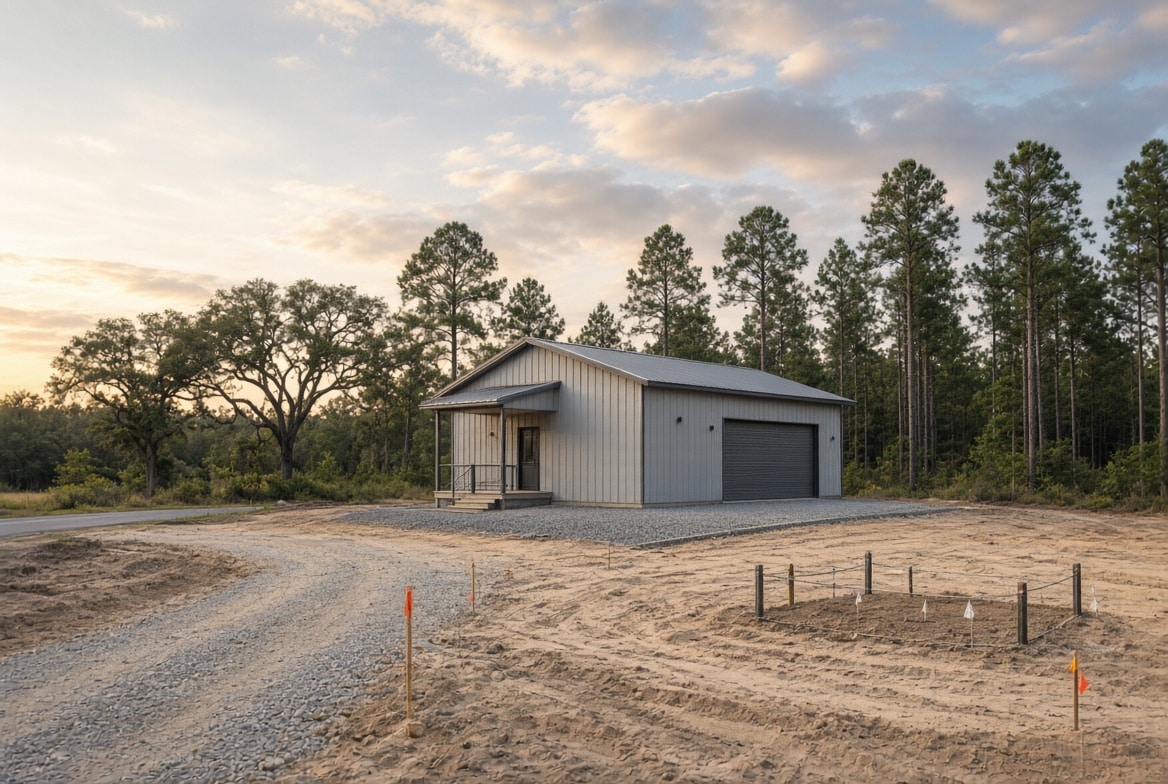
- Site work: clearing, grading, driveway, building pad and drainage
- Wastewater: septic system design, permit and installation, if public sewer isn’t available
- Water: well drilling, pump and tank, or a tap fee if a public line reaches the parcel
- Power: the run from the road to your panel, and any utility fees
- Permits, inspections and design (plans, engineering)
- Insurance during construction and after
- Contingency for what you find in the ground
Septic is a good example of why site lines can’t wait. South Carolina’s Department of Environmental Services (SCDES) says that if your property isn’t served by public or community sewer, you need its approval and septic permit first, and without that permit the county can’t issue your building permit. The SCDES process for a single home runs through its online ePermitting portal: you submit the Onsite Wastewater System Application (D-1740) with a copy of the plat or deed, pay the application fee ($150 when we checked), an inspector evaluates the site and soil, and once you have a Permit to Construct you hire a licensed installer. SCDES also notes that sites below the Fall Line may need backhoe pits for the evaluation.
Private wells have their own permit. Under South Carolina’s Regulation 61-44, a new residential well needs coverage under the SCDES general permit before it’s drilled, and the well must be built by a South Carolina certified well driller.
From our own build (not in South Carolina): we moved plumbing after the slab was poured, and that change cost about $2,000. Here’s what that cost and why. Site and utility decisions are cheapest on paper.
Compare inland and coastal questions without universal surcharges
You’ll see claims that coastal builds cost “X% more.” We’re not repeating any of those, because the real difference depends on your parcel, not your county name. Instead, ask the same questions everywhere and let the answers set the budget:
- What design wind speed applies to this exact site?
- Is any part of the parcel in a mapped flood zone?
- Where will the septic system and well go, and what does the soil evaluation allow?
- What will insurance require, and from whom can I buy it?
Inland, the same questions still matter. Soil, slope and drainage drive site work anywhere in the state.
Verify wind, flood and insurance requirements for the parcel
Wind. South Carolina’s residential code amendments tell builders to use the ultimate design wind speed from the ASCE Hazard Tool, and they let the local building official set the wind design category within their jurisdiction, as long as it doesn’t exceed the ASCE values. Practically: get the design wind speed for your address from the building department before you order a steel package, and make sure the engineering on the kit matches it.
Flood. The South Carolina Department of Natural Resources’ Flood Mitigation Program administers the National Flood Insurance Program in the state. Locally, your county or town’s floodplain administrator reviews building in mapped flood areas. Ask them whether any part of your building site is in a special flood hazard area before you buy or design.
Insurance. State law created the South Carolina Wind and Hail Underwriting Association as a residual market for wind and hail coverage in the coastal area, for owners who can’t get it in the regular market. The law defines that coastal area as specific parts of Beaufort, Charleston, Colleton, Georgetown and Horry counties, and the state Department of Insurance has expanded the territory by order over the years; current maps are on the association’s website, scwind.com. The Department says you apply through any licensed insurance agent or broker. Talk to one before you close on coastal land, not after the slab is poured.
Confirm permits, septic, well and owner-work responsibilities
Which code? South Carolina’s 2021 codes have been in effect since January 1, 2023. The state Building Codes Council adopted the 2024 codes in August 2025 and set their implementation date for local jurisdictions as January 1, 2027. Under the Council’s rules, work on a building permit approved before an implementation date can be finished and inspected under the code that was in effect when the permit was issued. One more wrinkle: a resolution to approve the state’s residential-code regulation (S.1076) was still in a Senate committee when we checked. If your permit application lands near January 2027, ask the building department which edition your plans will be reviewed under.
Owner-builder rules. South Carolina lets an owner act as their own builder under S.C. Code §40-59-260, with conditions. In plain terms:
- You do the work yourself, with your own employees, or with licensed contractors.
- The house is for you or your family to live in, not to sell or rent. If you sell or rent within two years after completion, the law treats that as evidence it was built for sale or rent.
- You must personally appear and sign the building permit application, and you’ll receive a state disclosure statement.
- You can’t hire an unlicensed builder or specialty contractor. Plumbers, electricians and HVAC installers are licensed specialty contractors under state law.
- When the house is done, you must file a notice with the register of deeds stating it was built by the owner as an unlicensed builder. Skipping that revokes the exemption.
Lesson: budget separately for every trade you’ll hire, and confirm with your building department which inspections apply to work you do yourself. This is a summary, not legal advice.
Compare equal-scope written quotes
A quote is only comparable to another quote with the same scope. For every builder or supplier, ask for a written scope that answers:
- Shell, dry-in or completed home?
- What’s excluded (site work, septic, well, power, permits, delivery, erection)?
- What design wind speed is the package engineered for?
- Who pulls which permits?
- How long is the price good for, and what triggers a change order?
Put the answers side by side before you look at the totals. The cheapest number with half the scope isn’t cheaper.
Decide what must be verified before committing
Before you buy land or sign with a builder, try to have these in hand:
- A septic site evaluation or Permit to Construct from SCDES (or written confirmation sewer is available)
- Your water plan: well permit path or a utility’s written availability
- The design wind speed and flood status for the building site, from the local offices
- An insurance quote for the finished home at that address
- At least two written quotes with matching scope
- Your owner-builder plan, if you’re using the exemption, reviewed against §40-59-260
If any of those are unknown, keep them on your list as unknowns with a contingency line, not as zeros.
Get organized before you spend: our free Barndominium Starter Kit includes a budget worksheet with estimated-versus-actual columns, a land evaluation guide and a builder interview checklist you can use with South Carolina quotes.
Barndominium Cost in South Carolina: Frequently Asked Questions
How much does a barndominium cost in South Carolina?
We don’t publish a statewide figure yet because we don’t have dated, equal-scope South Carolina quotes. Your total depends on scope (shell, dry-in or finished), site work, septic, water, power and insurance for your parcel. Collect at least two written quotes with matching scope.
Can I build my own barndominium in South Carolina without a license?
Possibly. S.C. Code §40-59-260 allows owners to build a home for their own or their family’s occupancy, with conditions: you sign the permit yourself, hire only licensed contractors, don’t sell or rent within two years, and record a notice with the register of deeds. Confirm details with your building department.
Do I need a septic permit before a building permit?
If public or community sewer isn’t available, yes. SCDES says the county can’t issue your building permit without its septic approval and permit.
Does building near the coast change the budget?
It can, through wind design, flood requirements and insurance, but there’s no fixed surcharge we can give you. Get the design wind speed, flood status and an insurance quote for the exact address.
Which building code will my barndominium be reviewed under?
The 2021 South Carolina codes have applied since January 1, 2023. The 2024 codes have an implementation date of January 1, 2027. Ask your building department which applies to your permit date.
Related guides: Buying Land for a Barndominium · North Carolina cost guide · Tennessee cost guide · Plumbing rough-in checklist · Electrical cost
Sources (checked Nov 6, 2026): S.C. Code §§40-59-20, 40-59-260; SC Building Codes Council (LLR) code adoption page and 2024 Modification Index; SCDES septic permits and private wells; SCDNR Flood Mitigation Program; S.C. Code §§38-75-310, 38-75-330; SC Department of Insurance Wind Pool FAQ; SC Code Regs. 8-236; S.1076 (2025–2026 session).